
Local Government and Addressing Social Vulnerability through Ordinance
Local ordinances have a unique ability to negatively and positively impact socioeconomic disparities, but to create change on the local level, a coalition of legislators needs agreeable framing, political capital, and material resources.
I. Introduction
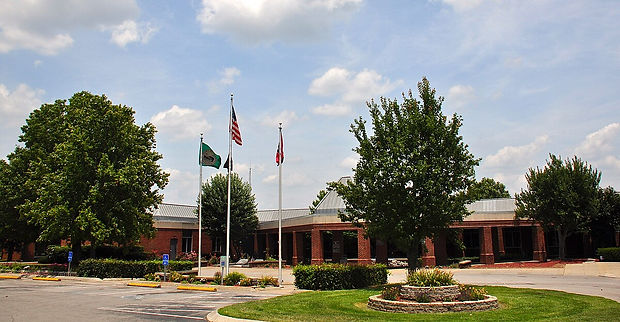
Smyrna, Tennessee is a quickly growing city about 20 minutes south of Nashville on I24. It was a small town that has nearly doubled in size and population in the past decade, while its infrastructure and government struggle to keep up. I grew up in Smyrna, and when I interned for the Town Attorney’s office there a few summers ago, I learned that local government has a profound impact on equity and social vulnerability, and ordinances—often seen as neutral or minor rules—can significantly shape people's experiences with the legal system.
II. Inequities in Local Government
Smyrna is unique in many ways, one of which is that it has a town municipal criminal court— General Sessions handles town ordinance violations ranging from overgrown lawns to minor traffic incidents. I had the opportunity to sit in on several hearings there over the course of my internship, but there is one pair that stood out to me. I recall the experience in my notes on the day (Artifact 1).
The first hearing was for a white, English-speaking woman who had an unpaid fine for leaving her trash out for too long. She explained to the judge that she had young children and a death in the family, and she was struggling to find the time to make it to the dump. The judge was sympathetic and indicated that the woman would be allowed to avoid the fine if she took got rid of the trash within the next week.
Just after this hearing, there was another for an older Latino, Spanish-speaking woman who was contesting a tax lien on her property because of extremely overgrown grass. The woman had a translator and explained to the judge that she was injured and unable to operate her lawn mower, and that her son was not able to come and cut her grass often because of his work schedule. However, because she was speaking through a translator, she often interrupted the judge, or the translator would begin to speak while the judge was still finishing a thought. The judge became irritated with the uneven flow of the conversation and reminded the woman multiple times of the rules of court decorum. The judge did not grant the woman any exception to her lien.
The American justice system promises to judge people with blind equality and to ensure that no one is treated differently based on socioeconomic or identity factors. This promise is often broken, though, by all levels of government. In this case, I witnessed how local ordinances—strictly enforced grass regulations and neighborhood HOA standards—can disproportionately impact those who are lower-income and do not have the time or resources to comply. Further, the procedure of this small General Sessions court resulted in a white, English-speaking woman being granted leniency where a similarly situated Latino, Spanish-speaking woman was not.
Artifact I: Notes from General Sessions Court
This is a page from my notes on the General Sessions Court from my internship with the Town Attorney's Office in Smyrna Tennessee. In it, I reflect on the inequitable treatment of two cases heard that day.
"[CASE 1] §17-107 -- Trash Disposal
-
Woman left [her] trash out for too long, violated ordinance 17-107
-
Fine was unpaid. Offense per day.
-
Defendant talks: young children and mother died, could not take out the trash
[CASE 2] §13-103 -- Grass, Weeds. PROPERTY LIEN
-
Woman failed to cut grass- reached over one foot tall.
-
Lien on property. Offense per day.
-
Defendant talks (THROUGH [A] TRANSLATOR, [SHE IS] SPANISH SPEAKING): Injury made her unable to operate mover, son works during the day. She's elderly.
-
Judge felt disrespected by language barrier"
-
III. Social Vulnerability and Ordinances
I was reminded of this day at court later, when I started a position as a research assistant for Dr. Rebecca Entress, an Assistant Professor of Public Administration interested in emergency management policy. For one project with her, I used the Social Vulnerability Index (SoVI) to examine how different demographics of people fare in the wake of a variety of natural disasters. The index attempts to describe the extent to which a person can be vulnerable to hazard based on factors like income, race, age, and type of housing (rent/own, multi-unit/single family home), etc. None of these factors cause someone to be affected by a natural disaster. However, these factors are correlated to risks that people face based on their access to emergency preparedness resources, and looking at the risks together, researchers can predict who is more vulnerable to the consequences. These kinds of risks—such as lack of access to transportation for evacuation, the inability to afford home insurance, or reliance on community aid programs—also translate to disparities in how people interact with local government policies, including ordinances and fines. In this way, local government processes can cause or extubate existing inequities.
While local governments have the potential for major harm, they also have the most potential for effective interventions. Last semester, I took a course called Homelessness in South Carolina (HNRS 330), in which we discussed that many effective interventions come from city government initiatives and the removal of harmful city ordinances (like nuisance ordinances and the criminalization of homelessness). In a blog post for the course (Artifact 2), I examine the idea that though most local politicians have framed the issue of homelessness in the same way, there is not always positive action from city councils. One reading we did for the class, Noy (2009), explains that material resources and political capital are necessary for a coalition to carry out desired policy in local government, even if most politicians agree upon the facts and presentation of an issue. In other words, a coalition of city counselors tried to pass legislation addressing homelessness that was agreed upon among left-leaning politicians and centrists (a majority), but the smaller right-leaning coalition was able to retain the support of centrists because of their superior funding and political capital at the time. This concept, the necessity of resources and shared framing for the passage of legislation to address homelessness, also applies more broadly to issues of social justice and inequity in city government.
Artifact II: SCHC 330 Blog Post
This is a weekly reflection on readings and experiential learning for my Homelessness in South Carolina course. In it, I reflect on the policy barriers that social justice-related legislation faces in local governments.
"In a case study carried out in San Fransico, Noy (2009) found that the framing, or the agreed upon facts and way the issue was presented, of homelessness policy was similar between centrist and left-leaning politicians... So, common framing without material resources or political capital is not enough. This leaves two paths to overcoming the policy barrier-- (1) shifting the framing of right-leaning politicians by finding common ground, or (2) finding more material resources and political capital for the left. The latter is most likely to be accomplished through successful elections and is therefore a more variable strategy. So, I propose reframing the issue for the political right as the best solution to the policy barrier. I believe by focusing on some of the more economic reasons for switching to cheaper strategies in the long run and pushing for the destigmatization of homelessness, this could be accomplished. Consensus is hard to reach, but likely necessary to end homelessness."
IV. Conclusion
Local ordinances have a unique ability to negatively and positively impact socioeconomic disparities, but to create change on the local level, a coalition of legislators needs agreeable framing, political capital, and material resources. This awareness contributes to my pursuit of the GLD pathway for Professional and Civic Engagement, as I will be able to carry an understanding of social vulnerability in my career as a public servant to counteract the discrimination and inequality that are too often inherent to government processes.
V. Works Cited
Darren Noy, When Framing Fails: Ideas, Influence, and Resources in San Francisco's Homeless Policy Field, Social Problems, Volume 56, Issue 2, 1 May 2009, Pages 223–242, https://doi.org/10.1525/sp.2009.56.2.223
